The Kindlifresserbrunnen (German for Child Eater Fountain) is a fountain at the Kornhausplatz (Granary Place) in Bern, Switzerland. It is one of the Old City of Bern's fountains from the 16th century.
It was created in 1545/46 by Hans Gieng in place of a wooden fountain from the 15th century. The new fountain's original name was Platzbrunnen (Place Fountain); the current name was used first in 1666. Kindli is a Swiss German diminutive for the German word Kind, meaning child. A literal translation of the name Kindlifresserbrunnen therefore would be "Fountain of the Eater of Little Children".
The fountain sculpture is a sitting ogre devouring a naked child. Placed at his side is a bag containing more children. Because the ogre is wearing a pointed hat resembling a Jewish hat, it has been speculated about the possibility of the ogre being the depiction of a Jew as an expression of blood libel against Jews. According to other theories it is a depiction of the Greek god Cronus. Probably, however, it is just a carnival character intended to frighten disobedient children.
Around the fountain's base runs a frieze showing armed bears going to war, including a piper and a drummer. The frieze was designed by Hans Rudolf Manuel.
Tuesday, June 29, 2010
Yum!
Sunday, June 27, 2010
Thursday, June 24, 2010
Tuesday, June 22, 2010
Monet's unknown masterpiece, Dogs At Cards.
Wiki:Dogs Playing Poker refers collectively to a series of sixteen oil paintings by C. M. Coolidge, commissioned in 1903 by Brown & Bigelow to advertise cigars. All the paintings in the series feature anthropomorphized dogs, but the nine in which dogs are seated around a card table have become derisively well-known in the United States as examples of mainly working-class taste in home decoration. Critic Annette Ferrara describes Dogs Playing Poker as "indelibly burned into ... the American collective-schlock subconscious ... through incessant reproduction on all manner of pop ephemera."
Detective Michael McCann: Monet's unknown masterpiece, Dogs At Cards.
Sunday, June 20, 2010
Could Be Worse: Could Be Raining Men -
Wiki:
Raining animals is a rare meteorological phenomenon, although occurrences have been reported from many countries throughout history. One hypothesis that has been offered to explain this phenomenon is that strong winds travelling over water sometimes pick up creatures such as fish or frogs, and carry them for up to several miles. However, this primary aspect of the phenomenon has never been witnessed or scientifically tested.
The animals most likely to drop from the sky in a rainfall are fish and frogs, with birds coming third. Sometimes the animals survive the fall, especially fish, suggesting the animals are dropped shortly after extraction. Several witnesses of raining frogs describe the animals as startled, though healthy, and exhibiting relatively normal behavior shortly after the event. In some incidents, however, the animals are frozen to death or even completely encased in ice. There are examples where the product of the rain is not intact animals, but shredded body parts. Some cases occur just after storms having strong winds, especially during tornadoes.
However, there have been many unconfirmed cases in which rainfalls of animals have occurred in fair weather and in the absence of strong winds or waterspouts.
Rains of animals (as well as rains of blood or blood-like material, and similar anomalies) play a central role in the epistemological writing of Charles Fort, especially in his first book, The Book of the Damned. Fort collected stories of these events and used them both as evidence and as a metaphor in challenging the claims of scientific explanation.
The English language idiom "it is raining cats and dogs" (As well as its Swiss-German equivalent, "Raining frogs and snakes"), referring to a heavy downpour, is of uncertain etymology, and there is no evidence that it has any connection to the "raining animals" phenomenon.
French physicist André-Marie Ampère was among the first scientists to take seriously accounts of raining animals. He tried to explain rains of frogs with a hypothesis that was eventually refined by other scientists. Speaking in front of the Society of Natural Sciences, Ampère suggested that at times frogs and toads roam the countryside in large numbers, and that the action of violent winds can pick them up and carry them great distances.
More recently, a scientific explanation for the phenomenon has been developed that involves waterspouts. Waterspouts are capable of capturing objects and animals and lifting them into the air. Under this theory, waterspouts or tornados transport animals to relatively high altitudes, carrying them over large distances. The winds are capable of carrying the animals over a relatively wide area and allow them to fall in a concentrated fashion in a localized area. More specifically, some tornadoes can completely suck up a pond, letting the water and animals fall some distance away in the form of a rain of animals.
This hypothesis appears supported by the type of animals in these rains: small and light, usually aquatic. It is also supported by the fact that the rain of animals is often preceded by a storm. However the theory does not account for how all the animals involved in each individual incident would be from only one species, and not a group of similarly-sized animals from a single area.
In the case of birds, storms may overcome a flock in flight, especially in times of migration. The image to the right shows an example where a group of bats is overtaken by a thunderstorm. The image shows how the phenomenon could take place in some cases. In the image, the bats are in the red zone, which corresponds to winds moving away from the radar station, and enter into a mesocyclone associated with a tornado (in green). These events may occur easily with birds in flight. In contrast, it is harder to find a plausible explanation for rains of terrestrial animals; the enigma persists despite scientific studies.
Sometimes, scientists have been incredulous of extraordinary claims of rains of fish. For example, in the case of a rain of fish in Singapore in 1861, French naturalist Francis de Laporte de Castelnau explained that the supposed rain took place during a migration of walking catfish, which are capable of dragging themselves over the land from one puddle to another. Thus, he argued that the appearance of fish on the ground immediately after a rain was easily explained, as these animals usually move over soft ground or after a rain.
Saturday, June 19, 2010
Dark Roasted Weirdsville

Roll up, roll up, roll up! You, sir, say that you dream of fame, and all the rewards it offers, but lack any talent whatsoever? And you, over there, wish beyond anything in this world to be the recipient of innumerable offers of marriage? And you, kind sir, desire to earn a considerable fortune but without all the trauma of actual work? Well, ladies and gentlemen, I can make all these dreams and far more a reality. How, you ask? How can I impart to you kind and far-too-simple souls the possible ability to become known the world over, perhaps have innumerable ladies of fine, and maybe not-so-fine, breeding ask for your hand in matrimony, as well as maybe receive substantial financial rewards?
The answer, you see, is in this box. But before I reveal its contents, and the answer to all your desires, I must first tell you all a story – the story of one Harry Bensley.
Harry was, to put it mildly, a bit of a rogue, a rascal, a rake, a rapscallion. Born around 1877, Harry soon proved to as wily with his businesses and investments as he'd was with the ladies, the bottle, and the cards – creating for himself an self-indulgently lavish and totally outlandish lifestyle.
But, alas – or so some stories go – Harry's luck deserted him one day and he lost it all on a foolish wager. Facing absolute ruin, Harry had few options – until, that is, the intervention of John Pierpont Morgan and Hugh Cecil Lowther (the 5th Earl of Lonsdale).
What Morgan and Lowther did was offer poor Harry an opportunity to regain his fortune. All Harry had to do was accept another, very possibly, foolish wager.
THE MAN IN THE IRON MASK
Outrageous? Definitely! Bizarre? Assuredly! Insane? Absolutely! But what choice did Harry have?
Harry, you see, had to take a stroll. But not one simply down to the local for a point, or even a few dozen, or even hundred, miles. No, according to the terms of Morgan and Lowther's wager, Harry had to walk not just across England, or even down and through Europe, or into the Middle East and then China. No, ladies and gentlemen, Harry had to walk all the way around the entire Earth.
Yes, you may gasp. Assuredly, you want shake your heads in disbelief, but those were the terms of the bet. But that's not all. For not only did Harry have to walk all the way around this lovely world but he also had a few other, well, 'unusual' terms to obey if he was to regain what he'd lost.
First of all, Harry had to follow a very specific path through no less than 169 separate British cities, getting in each one a signature proving his visit. After this would follow travels to 18 other countries, again in a strict order.
Second, Harry would begin his incredible journey with no more than one British pound in his pocket. Any money made on the trip could only be made by selling novelty picture postcards explaining the bet.
Third, his only change of clothing would be a spare set of undergarments.
Fourth, he pound push a baby carriage the entire way.
Fifth, Harry would have a companion who would make sure that Harry obeyed every term and requirement of the wager. No cheating, Harry!
Sixth, Harry would have to – somehow, somewhere – find himself a wife.

As said, this was outrageous, bizarre, insane, but Harry agreed to every requirement and term of the bet. He would push his stroller, he would have only a change of underwear, he would have no money except for what he made selling his postcards, and he would find himself a wife.
But there was one other term, ladies and gentlemen, one other requirement that Harry had to meet to win back his fortune. And that thing, the final condition, has to do with this box, right here at my feet.
You see Harry had to complete his round-the-world walk without a single, solitary person recognizing him. Yes, my rapt audience, Harry had to travel through Britain, across Europe, into Asia and beyond without even once being recognized – even by the woman he would somehow manage to agree to marry him.
And how was Harry supposed to accomplish this? And did Harry win his bet? Ah, but first things first – and now I shall open the box.
HOW TO WIN FAME, FORTUNE, AND MARRIAGE PROPOSALS
Amazing, isn't it? A real antique, too. It's hard to believe that anyone ever wore anything like this – or that Harry Bensley agreed to wear it on planned trip around the world.
The helmet is from a suit of armor and weighs almost five pounds and, yes, Harry had to wear it constantly.
On January 1, 1908, Harry began his journey: wearing his helmet, pushing his pram, followed by his monitor, he began his walk around the world.
Did Harry succeed in his outrageous, bizarre, insane voyage? Did he win back his fortune or did some cruel accident void the terms of the wager? Well, for a while things got sticky. As he traveled, the tale of the Man In The Iron mask grew and people began to flock to see him – as well as try and guess his identity. Even a newspaper of the time, in a moment of cruelty, offered a reward of one thousand pounds to anyone who could guess his identity.
Eventually Harry arrived in Italy, having walked over 30,000 miles in six years without ever voiding the terms of the wager. Alas, the fate – and the failure of diplomacy – intervened in 1914.
The details of what occurred next are hazy, at best. Some claim that Harry called off the wager to serve his country in World War 1, while others say that Morgan called it off and gave Harry a small sum, and there are even a few who argue that other, unknown, causes interfered. In any event, Harry fought for his country and, again the cruelties of fate, was seriously wounded – but Harry's poor luck continued when he lost whatever else he had and ended up having to take a series of low-end positions until his death in 1956.
You say you desire fame but lack talent? You say you lust after fortune but do not want to soil your hands with work? You say you crave the attention of women?
Well, maybe you will have better luck than poor Harry when you put on this ancient helmet and try to stroll around the world without once being identified. But before you disparage Harry Bensley you should know that even though Harry never won back his fortune, and his story is not as famous as some people's, Harry did manage to receive 200 or so marriage proposals from women who'd never seen his face.
But Harry, the once-rake, the once-rapscallion, never once accepted their offers. So maybe Harry did win a bit of something with his amazing bet after all: a special form of nobility befitting the knight's helmet he wore for over six years.
Thursday, June 17, 2010
Musical Interlude: Stay Alive By GLaDOS (From Portal)
Wiki:
GLaDOS (Genetic Lifeform and Disk Operating System) is a fictional artificially intelligent computer system found in the Valve Software video game Portal, voiced by Ellen McLain. She initially appears as a voice to guide and aid Chell, the player's character, through the game's chambers, but over time, her words and actions become increasingly malicious, and she makes multiple attempts to kill Chell. After a face-to-face confrontation with GLaDOS, Chell destroys her and escapes. GLaDOS was universally praised for her contributions to the quality of Portal's writing, winning multiple awards for best new character from GameSpy, GamePro, and X-Play.
At the end of "Portal," Ellen McLain performs again as GLaDOS in a song called "Still Alive" by Jonathan Coulton, which has become an internet hit, receiving praise from multiple outlets for the quality of its writing. It has been featured in multiple installments of the Rock Band series as free downloadable content. It is also available for purchase as a part of the Orange Box original soundtrack on iTunes.
#
This was a triumph.
I'm making a note here: HUGE SUCCESS.
It's hard to overstate my satisfaction.
Aperture Science
We do what we must
because we can.
For the good of all of us.
Except the ones who are dead.
But there's no sense crying over every mistake.
You just keep on trying till you run out of cake.
And the Science gets done.
And you make a neat gun.
For the people who are still alive.
I'm not even angry.
I'm being so sincere right now.
Even though you broke my heart.
And killed me.
And tore me to pieces.
And threw every piece into a fire.
As they burned it hurt because I was so happy for you!
Now these points of data make a beautiful line.
And we're out of beta.
We're releasing on time.
So I'm GLaD. I got burned.
Think of all the things we learned
for the people who are still alive.
Go ahead and leave me.
I think I prefer to stay inside.
Maybe you'll find someone else to help you.
Maybe Black Mesa
THAT WAS A JOKE.
HAHA. FAT CHANCE.
Anyway, this cake is great.
It's so delicious and moist.
Look at me still talking
when there's Science to do.
When I look out there, it makes me GLaD I'm not you.
I've experiments to run.
There is research to be done.
On the people who are still alive.
And believe me I am still alive.
I'm doing Science and I'm still alive.
I feel FANTASTIC and I'm still alive.
While you're dying I'll be still alive.
And when you're dead I will be still alive.
Tuesday, June 15, 2010
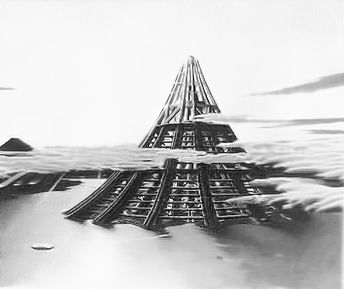
The Tallest Building Ever Fully Envisioned?
Wiki:The X-Seed 4000 is the tallest building ever fully envisioned, meaning that the designs for construction have been completed. The idea was initially created and developed by Peter Neville.
The X-Seed 4000 "is never meant to be built," says Georges Binder, managing director of Buildings & Data, a firm which compiles data banks on buildings worldwide. "The purpose of the plan was to earn some recognition for the firm, and it worked."
Its proposed 4 km (2.485 miles) height, 6 km (3.728 miles) wide sea-base, and 800 floor capacity could accommodate five hundred thousand to one million inhabitants.
It was designed for Tokyo, Japan by the Taisei Corporation in 1995 as a futuristic environment combining ultra-modern living and interaction with nature.
Unlike conventional skyscrapers, the X-Seed 4000 would be required to actively protect its occupants from considerable air pressure gradations and weather fluctuations along its massive elevation. Its design calls for the use of solar power to maintain internal environmental conditions. Also, the proposed area is situated on The Pacific Ring of Fire, which is the most active volcano range in the world so X-Seed 4000 would be subject to tsunamis and earthquakes. The Shimizu Mega-City Pyramid (also planned for Tokyo, Japan) faces the same problems.
A sea-based location and a Mount Fuji shape are some of this building's other major design features — the real Mount Fuji is land-based and is 3776 m (1.725 miles) high, nearly 224 m shorter than X-Seed 4000. The X-Seed 4000 is projected to be twice the height of the Shimizu Mega-City Pyramid at 2004 m. Other projects that may be in the top five man made structures are the Dubai City Tower (2400 m) and the Bionic Tower (1128 m) in either Hong Kong or Shanghai. These structures will be in Asia.
Some estimate that the cost to construct the X-Seed 4000 structure may be somewhere between US$300–900 billion, in 2006 dollars ($324 billion–$972 billion in 2010).
Sunday, June 13, 2010
Shall We Motor?
Wiki:
The Dymaxion car was a concept car designed by U.S. inventor and architect Buckminster Fuller in 1933. The word Dymaxion is a brand name that Fuller gave to several of his inventions, to emphasize that he considered them part of a more general project to improve humanity's living conditions. The car had a fuel efficiency of 30 miles per US gallon (7.8 L/100 km; 36 mpg). It could transport 11 passengers. While Fuller claimed it could reach speeds of 120 miles per hour (190 km/h), the fastest documented speed was 90 miles per hour (140 km/h).
Isamu Noguchi was involved with the development of the Dymaxion car, creating plaster wind tunnel models that were a factor in determining its shape, and during 1934 drove it for an extended road trip through Connecticut with Clare Boothe Luce and Dorothy Hale.
The car was a three wheeler, steered by a single rear wheel, and could do a U-turn in its own length. However, the rear-wheel steering made the car somewhat counterintuitive to operate, especially in crosswind situations. The body was teardrop-shaped, and naturally aerodynamically efficient. The car was twice as long as a conventional automobile, at 20 feet (6.1 m) long. Drive power was provided by a rear-mounted Ford V8 engine, (See: RF →) which produced 85 brake horsepower (63 kW; 86 PS) through the front wheels. The front axle was also a Ford component, being the rear axle of a contemporary Ford roadster turned upside-down.
An accident at the 1933 Chicago world's fair damaged the first prototype badly, killing the driver, and seriously injuring the two passengers. The Dymaxion had rolled over, and although the driver was wearing a seatbelt, the prototype's canvas roof had not offered sufficient crash protection. The cause of the accident was not determined, although Buckminster Fuller reported that the accident was due to the actions of another vehicle that had been following the Dymaxion closely. The crash prompted investors to abandon the project, blaming the accident on deficiencies of the vehicle's steering.
In his 1988 book The Age of Heretics, author Art Kleiner maintained that the real reason why Chrysler refused to produce the car was because bankers had threatened to recall their loans, feeling that the car would destroy sales for vehicles already in the distribution channels and second-hand cars.
Although the Dymaxion cars were not produced, the design was influential on several subsequent designs. The VW Transporter van of the late 1940s resembled the Dymaxion slightly, being a multi-seat mini-van with an aerodynamic body. Buckminster Fuller's Dymaxion concept of obtaining optimal efficiency by aerodynamic design and employing the most advantageous materials, although obvious, may have especially influenced such designs as the Aptera hybrid car prototype, which, like the Dymaxion, is a three wheeled, ultra light, aerodynamic, fuel efficient vehicle design.
Of the three prototype cars built, only the second prototype survives, located in the Harrah Collection of the National Automobile Museum in Reno, Nevada. The exterior has been restored, though it is a hollow shell, as they did not know what the Dymaxion's interior was like.
As of September 2009, the one surviving Dymaxion is undergoing a partial interior restoration by the company Crosthwaite and Gardiner, with the help from the collective knowledge of fans at Synchronofile.com.
Thursday, June 10, 2010
The Myth - In Parts - Of John Fare
Wiki:The legend of John Charles Fare (or Faré) is the story of a man who slowly destroyed his own body.
As one version of the story goes, Fare was a performance artist whose performances involved the amputation of parts of his body and their replacement with metal or plastic decorations. Between 1964 and 1968, performing across Europe and Canada, he was lobotomized and lost a thumb, two fingers, eight toes, one eye, both testicles, his right hand, and several patches of skin. The amputated parts were preserved in alcohol. It is also said that Fare had the amputations performed by a randomly-controlled machine and ended his career by having his head amputated.
The legend was published by Tim Craig in Studio International in 1972; this version of the legend was reprinted in a fanzine made in collaboration with the band Coil in 1987.
Fare has been mentioned in connection with body art, industrial culture, and the practices of Rudolf Schwarzkogler and Bob Flanagan, and, like other performance artists, has been seen as a successor of the Christian martyrs. He has also been mentioned in the Guardian in connection with the German artist Gregor Schneider
Fare was impersonated during a Nocturnal Emissions concert in London in 1997. Writing about the event, a British music journalist recounts: "Fare cuts an eccentric figure. He wears trousers made from zips and has a diagram of a brain tattooed onto his shaven scalp. The performance artist placed his left hand on a chopping board with the fingers spread. Fare’s assistant, Jill Orr, is partially sighted and she slammed an axe between her boyfriend’s pinkies with increasing speed. Eventually the axe severed Fare’s little finger. This was the end of the performance art element within the evening’s entertainment".