Actually, it's not-so-bright past: US Army Depot & Warehouse, late 1940s [Via LIFE]
Tuesday, October 26, 2010
Saturday, October 23, 2010
Dark Roasted Biscotti
Here's another of my takes on doing a Biscotti for the always-wonderful Dark Roasted Blend. I have to say these are a real kick and a treat to put together!
Tuesday, October 19, 2010
Monday, October 18, 2010
Dark Roasted Weirdsville
Check it out: a brand new Dark Roasted Blend piece I did just went up: this time about old typewriters - especially the marvelous Malling-Hansen: The Writing Ball.
Horse and buggies, hoop skirts, steam engines, bustles ... oh, yes, life around the turn of the previous century was a delight of simplicity and workmanship. But that doesn't mean that the artisans and engineers of way-back-when didn’t at least have their hearts and minds in the right place.
Take, for example, what writing used to be like before a few very bright bulbs thought to create machines to make it easier: pens that constantly ran dry, ink that spilled or smeared, illegible handwriting ... getting the message across -- any message across -- by hand was problematic at best, totally confusing at worst.
One of the earliest of those bright bulbs was William Austin Burt who, in 1829, created what he called a 'typewritor.' If Burt's machine was the first is a matter of much debate as another, similar, machine had also built by Pellegrino Turri around the same time. Some even say the crown of 'first' should go to Henry Mill, who created a writing machine way back in 1714.
But all of these devices were just baby steps: more potential than actually being helpful to people whose job it was to be clear, concise and fast with their writing. There were a lot of others after them these early pioneers, but none of them were ever a real commercial success. Looking at them you can see why: in many of these very early models – called 'index typewriters,' by the way – the typing was done by selecting the letter to be used on a slider and then pressing it against the paper. To call these early monsters 'slow' is being kind. Changing the alphabetical slider to a disc version helped a bit but not enough to make any of these machines easy or popular.
In 1865, what many consider to be the true ancestor to the first true, efficient, and financially successful was developed by Rasmus Malling-Hansen: The Writing Ball. What's fascinating about Hansen's creation isn't just its efficiency but also it's strangely elegant beauty. Just look at it: a brass half-sphere covered with keys above a cylinder that held the paper. It was finely made, unlike some of the unsuccessful machines before it, looking more like a gentleman's watch than a piece of office equipment.
Sure, Hansen's Ball has some rather serious flaws – like the fact that it was hardly cheap and, because of the position of the ball and the paper under it, the typist really couldn't see what they were typing until they were done and the paper was removed from the machine -- but that didn't stop it from selling better than many other previous models. One quirk of the ball was that, unlike the QWERTY keyboard that pretty much every typewriter after it and every computer after those typewriters became extinct had, the ball's keys had been positioned to make typing easier for the typist and not the typewriter. By the way, in case you don't know the sad, strange story of QWERTY – which haunts us to this day -- the alphabet were originally put in that order because otherwise users would type faster than the machine could handle, thus jamming the keys. So QWERTY was created to keep that from happening: to keep the machine happy at the cost of typist efficiency.

Here's a fun bit of trivia for you folks now interested in Malling-Hansen's elegant writing ball: one particular person was interested in this new, wondrous invention – a celebrated writer who was having a hard time with his diminishing eyesight. While Nietzsche did get and use his writing ball he sadly didn't love it – though it is fascinating to visualize the author of Thus Spoke Zarathustra clicking and clacking on the mechanical beauty of one of Hansen's creations.
Eventually, though, other – and cheaper – machines were developed, saving generations of writers, secretaries, business people, and anyone else who used to have to put pen to paper, from cramp and bad handwriting. Though Hansen and his elegant ball have been almost lost to time it's nice to be able to show a new, QWERTY-slaved generation, the beauty of his creation.
Saturday, October 16, 2010
Friday, October 15, 2010
Wednesday, October 13, 2010
Tuesday, October 12, 2010
Weirdsville On The Cud
Here's another special piece I did for the great folks at the Aussie site The Cud. This time it's about the incredible Felix von Luckner, the The Benevolent Sea-Devil.
The year: 1917, the height of the War To End All Wars, sadly now referred to as World War 1. The Place: The Atlantic Ocean. You: the captain of an allied merchant ship carrying coal from Cardiff to Buenos Aires.
Then, like a ghost from the distant past, a ship appears: a beautiful three mastered windjammer flying a Norwegian flag. Staggered by this hauntingly lovely anachronism you think nothing of it coming alongside – it was common, after all, for friendly ships to want to synchronize their chronometers – until, that is, the ship's Norwegian flag is quickly replaced by the German eagle and the captain, in amazingly polite terms, backed up by guns that have mysteriously appeared in the windjammer's gunwales, explains that your ship is now his.
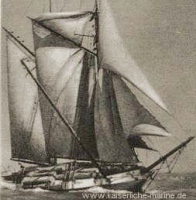
And so you have been captured by the Seeadler ("Sea Eagle" in German), captained by Felix von Luckner, or, as he was known by both enemies as all as allies, the Benevolent Sea-Devil.
Some people's lives are so broad, so wild, so amazing that they simply don't seem real. The stuff of Saturday matinees? Sure. But real, authentic and true? Never! But if even half of Felix von Luckner's life is true – and there's no reason to really doubt any of it – then he was truly a broad, wild, and utterly amazing fellow.
Born in 1881, in Dresden, Felix ran away from home at 13. Stowing away on a Russian trawler, he fell overboard – rescued, so the story goes, by grabbing hold of an albatross, the bird's flapping wings acting as a signal to a rescue party.
Making his way to Australia, Felix tried a number of – to put it politely – odd jobs: boxer, circus acrobat, bartender, fisherman, lighthouse keeper (until discovered with the daughter of a hotel owner), railway worker, kangaroo hunter, and even had a stint in the Mexican army. During all this Felix also became a notable magician and a favorite entertainer to no less than Kaiser Wilhelm himself.
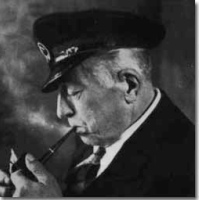
Making his way back to Germany he passed his navigation exams and served aboard a steamer before getting called to serve in the Navy on the SMS Panther.
Which brings us to that War That Was Supposedly The End To All Wars. Even though it was fought with steel and oil, the German's outfitted a number of older ships as raiders -- hidden guns, more powerful engines and the like – and sent them out to harass allied shipping. Most of them were, to put it politely, a failure. But then there was the Seeadler, under the command of Felix von Luckner.
During the course of the war Felix sank or captured no less that 16 ships – a staggering amount. What’s even more staggering is how Felix did it, and that he did it with grace, honor, and even a certain kindness. You see, while the Seeadler took out those ships it, during it's entire campaign, did it at the cost of only single human life. Most of the time the scenario went just as it did with your merchant ship carrying coal from Cardiff to Buenos Aries: the Seeadler would approach a target, raise it's German eagle and that would be that: the crew and cargo would be captured and the ship scuttled. Sometimes she'd fire a shot to two to get her pint across that she was serious, but it wasn't until the British ship, Horngarth, that anyone had actually been killed. Tricked into thinking they were investigating a stricken ship – Felix had actually used a smoke generator – the captured Horngarth had refused to stop broadcasting a distress signal. A single shot took out the radio but unfortunately killed the operator. Felix von Luckner, though, gave the man a full military funeral at sea and even went as far as to write the poor man's family telling them that he had died with honor.
To give you even more evidence that Felix von Luckner more than deserved the "benevolent" in his "Benevolent Sea-Devil" nickname he treated everyone he captured with dignity and respect: captured sailors were paid for their time while on his ship and officers ate with him at his captain's table. When the Seeadler got too packed with prisoners, by this time more than 300, Felix captured the Cambronne, a little French ship, cut down her masts and let all his prisoners go with the understanding that if they happened to get picked up before making land they wouldn't tell where the Seeadler was going.
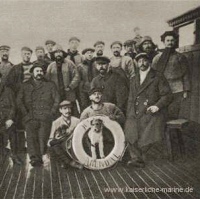
Respecting Felix's honor they didn't.
Alas, the Seeadler's rule of the Atlantic had to end sometime – but even that just adds to the broad, wild, and utterly amazing life of Felix von Luckner. With the British – and now the Americans – hot on her tail, Felix decided to take a quick barnacle-scraping break from piracy by putting the Seeadler into a bay on Mopelia, a tiny coral atoll. Now stories here conflict a bit – Felix always claimed that a rogue tsunami was to blame – but I think the more-standard explanation that the crew and prisoners of the Sealer were simply having a picnic on the island when their windjammer drifted aground.
Taking a few of his men in some long boats, Felix sailed off towards Fiji intending to steal a ship and come back for the Seeadler. Through a series of incredible adventures – including claiming to be Dutch-Americans crossing the Atlantic on a bet – the Sea-Devil was himself tricked into surrendering by the Fijian police who threatened, after becoming suspicious of one of Felix's stories, to sink his boat with an actually-unarmed ferry. By the way, the remaining crew and prisoners of the Seeadler had their own adventures, leading eventually to the escape of the prisoners and the capturing of the Seeadler's crew.
But even a Chilean prison camp wasn't the end for Felix, or not quite the end. Using the cover of putting on a Christmas play, he and several other prisoners managed to steal the warden's motorboat and then seize a merchant ship. Alas, Felix's luck ran out when they were captured again and spent the rest of the war being moved from one camp to another.
But rest assured the story doesn't end there.
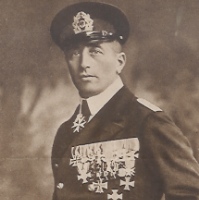
Far from it: after writing a book about his various adventures, Felix von Luckner toured the world entertaining audiences about the Seeadler – as well as demonstrating his strength by tearing phone books in half and bending coins between thumb and forefinger.
While, with the rise of Hitler, some people thought of Felix as a apologist, the captain had no love for the Nazi's – especially since the German government had frozen his assets when he refused to renounce the honorary citizenships and honors he'd received during his travels.
But the story of Felix von Luckner still isn't over. Retiring to the German town of Halle, he was asked by the mayor to negotiate the town's surrender to the Americans. While he did this, earning not only the respect of the Americans and the gratitude of the citizens, his reward from the Nazi's was to be sentenced to death. Luckily, Felix managed to flee to Sweden where he lived until passing away at the age of 84.
War is horror, war is pointless death, and war is needless suffering. But because of men like Felix von Luckner, war can also show the good, noble side of man – and that some men can remarkably earn the respect of friend and enemy alike.
The year: 1917, the height of the War To End All Wars, sadly now referred to as World War 1. The Place: The Atlantic Ocean. You: the captain of an allied merchant ship carrying coal from Cardiff to Buenos Aires.
Then, like a ghost from the distant past, a ship appears: a beautiful three mastered windjammer flying a Norwegian flag. Staggered by this hauntingly lovely anachronism you think nothing of it coming alongside – it was common, after all, for friendly ships to want to synchronize their chronometers – until, that is, the ship's Norwegian flag is quickly replaced by the German eagle and the captain, in amazingly polite terms, backed up by guns that have mysteriously appeared in the windjammer's gunwales, explains that your ship is now his.

And so you have been captured by the Seeadler ("Sea Eagle" in German), captained by Felix von Luckner, or, as he was known by both enemies as all as allies, the Benevolent Sea-Devil.
Some people's lives are so broad, so wild, so amazing that they simply don't seem real. The stuff of Saturday matinees? Sure. But real, authentic and true? Never! But if even half of Felix von Luckner's life is true – and there's no reason to really doubt any of it – then he was truly a broad, wild, and utterly amazing fellow.
Born in 1881, in Dresden, Felix ran away from home at 13. Stowing away on a Russian trawler, he fell overboard – rescued, so the story goes, by grabbing hold of an albatross, the bird's flapping wings acting as a signal to a rescue party.
Making his way to Australia, Felix tried a number of – to put it politely – odd jobs: boxer, circus acrobat, bartender, fisherman, lighthouse keeper (until discovered with the daughter of a hotel owner), railway worker, kangaroo hunter, and even had a stint in the Mexican army. During all this Felix also became a notable magician and a favorite entertainer to no less than Kaiser Wilhelm himself.

Making his way back to Germany he passed his navigation exams and served aboard a steamer before getting called to serve in the Navy on the SMS Panther.
Which brings us to that War That Was Supposedly The End To All Wars. Even though it was fought with steel and oil, the German's outfitted a number of older ships as raiders -- hidden guns, more powerful engines and the like – and sent them out to harass allied shipping. Most of them were, to put it politely, a failure. But then there was the Seeadler, under the command of Felix von Luckner.
During the course of the war Felix sank or captured no less that 16 ships – a staggering amount. What’s even more staggering is how Felix did it, and that he did it with grace, honor, and even a certain kindness. You see, while the Seeadler took out those ships it, during it's entire campaign, did it at the cost of only single human life. Most of the time the scenario went just as it did with your merchant ship carrying coal from Cardiff to Buenos Aries: the Seeadler would approach a target, raise it's German eagle and that would be that: the crew and cargo would be captured and the ship scuttled. Sometimes she'd fire a shot to two to get her pint across that she was serious, but it wasn't until the British ship, Horngarth, that anyone had actually been killed. Tricked into thinking they were investigating a stricken ship – Felix had actually used a smoke generator – the captured Horngarth had refused to stop broadcasting a distress signal. A single shot took out the radio but unfortunately killed the operator. Felix von Luckner, though, gave the man a full military funeral at sea and even went as far as to write the poor man's family telling them that he had died with honor.
To give you even more evidence that Felix von Luckner more than deserved the "benevolent" in his "Benevolent Sea-Devil" nickname he treated everyone he captured with dignity and respect: captured sailors were paid for their time while on his ship and officers ate with him at his captain's table. When the Seeadler got too packed with prisoners, by this time more than 300, Felix captured the Cambronne, a little French ship, cut down her masts and let all his prisoners go with the understanding that if they happened to get picked up before making land they wouldn't tell where the Seeadler was going.
Respecting Felix's honor they didn't.Alas, the Seeadler's rule of the Atlantic had to end sometime – but even that just adds to the broad, wild, and utterly amazing life of Felix von Luckner. With the British – and now the Americans – hot on her tail, Felix decided to take a quick barnacle-scraping break from piracy by putting the Seeadler into a bay on Mopelia, a tiny coral atoll. Now stories here conflict a bit – Felix always claimed that a rogue tsunami was to blame – but I think the more-standard explanation that the crew and prisoners of the Sealer were simply having a picnic on the island when their windjammer drifted aground.
Taking a few of his men in some long boats, Felix sailed off towards Fiji intending to steal a ship and come back for the Seeadler. Through a series of incredible adventures – including claiming to be Dutch-Americans crossing the Atlantic on a bet – the Sea-Devil was himself tricked into surrendering by the Fijian police who threatened, after becoming suspicious of one of Felix's stories, to sink his boat with an actually-unarmed ferry. By the way, the remaining crew and prisoners of the Seeadler had their own adventures, leading eventually to the escape of the prisoners and the capturing of the Seeadler's crew.
But even a Chilean prison camp wasn't the end for Felix, or not quite the end. Using the cover of putting on a Christmas play, he and several other prisoners managed to steal the warden's motorboat and then seize a merchant ship. Alas, Felix's luck ran out when they were captured again and spent the rest of the war being moved from one camp to another.
But rest assured the story doesn't end there.
Far from it: after writing a book about his various adventures, Felix von Luckner toured the world entertaining audiences about the Seeadler – as well as demonstrating his strength by tearing phone books in half and bending coins between thumb and forefinger.While, with the rise of Hitler, some people thought of Felix as a apologist, the captain had no love for the Nazi's – especially since the German government had frozen his assets when he refused to renounce the honorary citizenships and honors he'd received during his travels.
But the story of Felix von Luckner still isn't over. Retiring to the German town of Halle, he was asked by the mayor to negotiate the town's surrender to the Americans. While he did this, earning not only the respect of the Americans and the gratitude of the citizens, his reward from the Nazi's was to be sentenced to death. Luckily, Felix managed to flee to Sweden where he lived until passing away at the age of 84.
War is horror, war is pointless death, and war is needless suffering. But because of men like Felix von Luckner, war can also show the good, noble side of man – and that some men can remarkably earn the respect of friend and enemy alike.
Subscribe to:
Posts (Atom)