
Saturday, June 29, 2013


Friday, June 28, 2013
Thursday, June 27, 2013

Welcome To Weirdsville: The Imitation Of Those Who We Cannot Resemble
This is very, very cool: a brand new Welcome To Weirsville piece I wrote just went up on the excellent The Cud site.
Here's a tease below - and, of course, if you want to read more pieces about fun and odd and strange and (yep) weird history check out my book Welcome To Weirdsville

Almost all absurdity of conduct arises from the imitation of those who we cannot resemble. –Samuel Johnson
"Stop fidgeting, everyone ... Jimmy, that'd better not be gum in your mouth! No, Betty you can't go to the bathroom – you should have thought of that before we started ... now you'll just have to wait for the break. Okay, class, today we're going to be discussing possibly one of – if not the -- most important literary figures of the twentieth century: a woman who pretty much single handedly created what we consider to be modern literature..."
 It's quite sad, really, that so many of us have had the juices
systematically squeezed out of history, reducing it to nothing but
powdery, gagging facts and bland, pasty figures – or, even worse, giants
carved in marble, hands on hips, forever steadfastly glaring out at us
in the future, their destinies unquestionable.
But, believe me, do some digging and there's juice a plenty in those dusty heroes – and while many of them certainly deserve to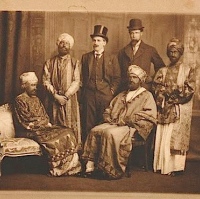 be
on their lofty pedestals you'll quickly learn that more than a few of
them might be wonderfully, delightfully, fun ... if not totally nuts.
Sarah Bernhardt, for instance, the legendary light of the stage, not only had a wooden leg, liked to sleep in her coffin, but also had quite a few ... involvements, shall we say, with people such as Victor Hugo and Gustavo Doré; Tycho Brahe, one of the brightest stars in astronomy not only had a fake metal nose (having lost his original in a duel) but kept an on-staff dwarf for the entertainment of his guests as well as himself; Richard Feynman, a Nobel Prize to his name, was an notorious humorist and prankster -- as well as quite the established cracksman, even claiming to have once easily got into the safe containing the plans for the first atomic bomb; Georges Simenon, the master French mystery author, not wrote over 200 novels but also claimed to have made love to 10,000 women; and let's not even get started on what M.Christian likes to do with balloon animals...
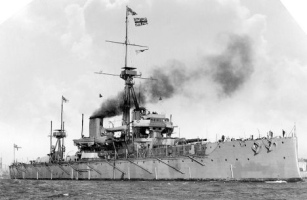
Which takes us to 1910, back when Britain quite literally ruled the waves: the time of what has been called by many to be the date of the greatest prank in all of history ... and the literary light who had a major part in it.
Now pranks were nothing new, especially for students of Cambridge, but this one – orchestrated by the infamously witty Horace de Vere Cole – set the bar. Horace tried afterward to top himself several times afterward, including infamously dumping horse ... leavings in the canals in Venice (to confuse the non-horse city residents), or arranging a group of bald men to sit in strategic places at the theater so that their domes, when viewed from the balcony, would spell out a rather (ahem) rude word, but his crowning achievement involved the pride of the British Navy, a few of his close friends, some costuming skills, the flag of Zanzibar, and a brilliant degree of planning – all of which rocked the world and nearly got one of them a sentence of ten of the best with a cane.
[MORE]
Here's a tease below - and, of course, if you want to read more pieces about fun and odd and strange and (yep) weird history check out my book Welcome To Weirdsville
The Imitation Of Those Who We Cannot Resemble
Almost all absurdity of conduct arises from the imitation of those who we cannot resemble. –Samuel Johnson
"Stop fidgeting, everyone ... Jimmy, that'd better not be gum in your mouth! No, Betty you can't go to the bathroom – you should have thought of that before we started ... now you'll just have to wait for the break. Okay, class, today we're going to be discussing possibly one of – if not the -- most important literary figures of the twentieth century: a woman who pretty much single handedly created what we consider to be modern literature..."
But, believe me, do some digging and there's juice a plenty in those dusty heroes – and while many of them certainly deserve to
be
on their lofty pedestals you'll quickly learn that more than a few of
them might be wonderfully, delightfully, fun ... if not totally nuts.Sarah Bernhardt, for instance, the legendary light of the stage, not only had a wooden leg, liked to sleep in her coffin, but also had quite a few ... involvements, shall we say, with people such as Victor Hugo and Gustavo Doré; Tycho Brahe, one of the brightest stars in astronomy not only had a fake metal nose (having lost his original in a duel) but kept an on-staff dwarf for the entertainment of his guests as well as himself; Richard Feynman, a Nobel Prize to his name, was an notorious humorist and prankster -- as well as quite the established cracksman, even claiming to have once easily got into the safe containing the plans for the first atomic bomb; Georges Simenon, the master French mystery author, not wrote over 200 novels but also claimed to have made love to 10,000 women; and let's not even get started on what M.Christian likes to do with balloon animals...
Which takes us to 1910, back when Britain quite literally ruled the waves: the time of what has been called by many to be the date of the greatest prank in all of history ... and the literary light who had a major part in it.
Now pranks were nothing new, especially for students of Cambridge, but this one – orchestrated by the infamously witty Horace de Vere Cole – set the bar. Horace tried afterward to top himself several times afterward, including infamously dumping horse ... leavings in the canals in Venice (to confuse the non-horse city residents), or arranging a group of bald men to sit in strategic places at the theater so that their domes, when viewed from the balcony, would spell out a rather (ahem) rude word, but his crowning achievement involved the pride of the British Navy, a few of his close friends, some costuming skills, the flag of Zanzibar, and a brilliant degree of planning – all of which rocked the world and nearly got one of them a sentence of ten of the best with a cane.
[MORE]
Wednesday, June 26, 2013
Bwythan Fallbutus is the 42nd victim of the Violent Unknown Event listed in the VUE directory
Wiki:
The Falls is a 1980 film directed by Peter Greenaway. It was Greenaway's first feature-length film after many years making shorts. It does not have a traditional dramatic narrative; it takes the form of a mock documentary in 92 short parts.
The premise of the film is that the world has been struck by a mysterious incident called the "Violent Unknown Event" or VUE, which has killed many people and left a great many survivors suffering from a common set of symptoms: mysterious ailments (some appearing to be mutations of evolving into a bird-like form), dreaming of water (categorised by form, such as Category 1, Flight, or Category 3, Waves) and becoming obsessed with birds and flight. Many of the survivors have been gifted with new languages. They have also stopped aging, making them immortal (barring disease or injury).
A directory of these survivors has been compiled, and The Falls is presented as a film version of an excerpt from that directory, corresponding to the 92 entries for persons whose surnames begin with the letters FALL-. Not all of the 92 entries correspond to a person - some correspond to deleted entries, cross references and other oddities of the administrative process that has produced the directory. One biography concerns two people - the twin brothers Ipson and Pulat Fallari, who are played (in still photographs) by the Brothers Quay.
In addition to the common VUE symptoms mentioned above, a number of themes run through the film. Among these are references to a number of bureaucratic organisations including the VUE Commission and the Bird Facilities Investments (a parody of the British Film Institute), the history of manned flight from Daedalus with the suggestion that birds may be responsible for the VUE (and that the film may thus be seen as a sequel to Hitchcock's The Birds), complex debates over the location of the epicentre of the VUE, and repeated references to Tulse Luper. Luper is a recurring off-stage character in Greenaway's early films, and would eventually appear on film in the epic series The Tulse Luper Suitcases (2003 onwards).
The Falls includes clips of a number of Greenaway's early shorts. It also anticipates some of his later films: the subject of biography 27, Propine Fallax, is a pseudonym for Cissie Colpitts, the central figure of Drowning by Numbers (1988), while the car accident in biography 28 prefigures that in A Zed and Two Noughts (1985).
The largely formal and deadpan manner of the narration contrasts with the absurdity of the content. The soundtrack is mainly by Michael Nyman and is partly based, like his later music for Drowning by Numbers, on the slow movement of Mozart's Sinfonia Concertante for Violin, Viola and Orchestra K. 364. It also includes numerous clips from various songs popular among the avant-garde of the time, including pieces by Brian Eno (in particular "Golden Hours" from Another Green World) and snippets of "Jugband Blues", the last song Syd Barrett recorded with Pink Floyd ...
... Bwythan Fallbutus is the 42nd victim of the Violent Unknown Event listed in the VUE directory. Bwythan Fallbutus was Betheda Fallbutus' eldest son. He was the officially-appointed VUE Commission's linguistic expert. He lived just off the Goldhawk Road within a three-minute walking distance of his mother, whom he visited every day. The VUE had given Bwythan a bone-marrow deficiency, wattles and cobs along his backbone, and a foot disease that shredded his toe-nails. He could drink salt water without harm but felt listless and debilitated away from the influence of chlorophyll, which is why there were always several plantpots in his office, and even on his desk. Bwythan could speak fourteen VUE languages and interpret successfully in nine of them at a diplomatic level. It was Bwythan who had organised the examination of Agropio Fallaver, the sole speaker of the language named after him. Although Bwythan had come to the private opinion that Fallaver was somehow a fake manoeuvred by FOX, the Society for Ornithological Extermination. Bwythan has privately researched the ten-thousand most popularly used words in forty-three of the main VUE languages and has produced a comparative dictionary. From this research he wrote a book, View from Babel, to explain, or attempt to explain the gift of tongues and the fragmentation of language. In trying to do this, and in his associated search for a common linguistic denominator, he successfully demonstrated that the names of birds were important key words. It was rumoured that it was because of the conclusions of his research that Bwythan was run down by a white van, registration number NID 92, on a zebra crossing in the Goldhawk Road. A van with the same registration had been seen outside Bwythan's house an hour before the accident. The police later found the vehicle responsible on a deserted airfield. It was supposed that the assailant, or assailants, had escaped by air.
Catch-Hanger Fallcaster is one of the victims of the Violent Unknown Event listed in the VUE directory. Her biography, number 49 in the movie, is one amidst several interrelated biographies concerning different members of the Fallcaster family. Catch-Hanger Fallcaster had been a teacher. She had taught Russian to Germans. And certainly before the VUE, she would never have admitted to a great knowledge of ornithology. The VUE had made Catch-Hanger three inches taller, paraylsed her index fingers and improved her eyesight. She now taught Abcadefghan to anyone who wanted to learn. Catch-Hanger has translated Tulse Luper's Some Birds of the Northern Hemisphere, establishing a definitive pronunciation of the Abcadefghan equivalents for the Falconidae. She has also started work on an Abcadefghan-English language primer that is based substantially on the three nursery rhymes, "Goosey, Goosey, Gander," "Who Killed Cock-Robin?," and "I Shot a Little Duck."
Tuesday, June 25, 2013
Welcome to Weirdsville: Snowball's Chance In Hell
From the mythological specter of the doughboy who can only breathe mustard gas, to the coincidence of the crossword puzzle containing the code words for the Normandy landing, conflict can bring out both the best, and the downright strangest, in human behavior and belief. So much so, that it would take much more than this little slice of cyberspace for me to outline them all. Just limiting ourselves to inventiveness still packs weirdsville to it's sprawling borders: the American kamikaze bats with their still-classified incendiary explosives, the stone-skipping delivery of the British dam-busting bombs, the around-the-corner Nazi submachine gun, Patton's phantom army, and the War Magicians, which is one of my faves: a group of British dance-hall conjurers who put their slight-of-hand talents to work making tanks into trucks, trucks into tanks, everything else into something else, all to trick the Axis.
One
of my all-time favorites, though, was the one that just, almost, nearly
happened. But before I reveal this glorious monument to inventive
mania, a little about its inventor.
Like many British eccentrics, Geoffrey Pyke
at first appears normal when viewed through Who's Who, but a closer
examination always starts the head shaking. Not to say that Pyke didn't
give his all and then some to the war effort - not at all. But it also
would be incorrect to say that what Pyke did give could be called, at
best, quirky - and, at best, bizarre.
Apprehended
trying to sneak into Berlin during the first World War, Pyke was
sentenced to a prison camp. By noting that sunlight momentarily blinded
his guards every day at one certain location, Pyke managed to escape,
becoming something of a celebrity by accounting his daring escapades
after the war.
Assigned to the War Office
during the second great conflict, Pyke threw himself into devising all
kinds of clever (and even often practical) means of aiding the war
effort. Stretcher-carrying sidecars for motorcycles? That was Pyke.
Pedal-powered shunt cars for railway yards? Pyke. Marking a special
motorized cart British commandos were to use with "Officer's Latrine" in
German on them -- so the Nazi's would leave it well alone? You guessed
it ... Geoffrey Pyke. Disguising British agents as avid golfers, and
then sending them all throughout Germany to secretly gather signatures
on a poll to convince Hitler that his people didn't want to go to war?
You guessed it. Like I said, quirky at best.
But
the concept that propelled Pyke from simple, fascinating, oddity to the
military limits of the delightfully absurd was the one he hit on while
pondering one of the great problems of the Second World War: that allied
shipping was being literally cut to pieces by the merciless, and
precise, German submarine fleet. Even Kaiser with his smooth assembly
line of cheap shipping couldn't compete with the appetites of the Wolf
Packs.
What was needed, Pyke considered, was some kind of strong military presence, a way of providing air cover for the desperately-needed merchant ships.
What was needed, Pyke considered, was some kind of strong military presence, a way of providing air cover for the desperately-needed merchant ships.
But there
were a lot of Liberty Ships, far too many to cover with even a token
fleet. Not only did those transport need protection, but they needed
cheap and easy protection, something simple to assemble, able to carry
long-range aircraft, and not so expensive as to draw valuable resources
from the battle fronts.
It would be easy to imagine Pyke sipping something cool when inspiration struck. But
what really causes the head to shake is to remember that Pyke was a
great British eccentric, and Brits (as anyone who has visited the UK can
attest) are completely alien to anything tall, cool, and – especially -
frosty.
Maybe it was watching winter slabs
majestically move down the Thames, or pale masses of crystals sluice
down a gutter, but whatever the inspiration, Pyke had his vision. But
before it could be put into anything even close to reality, Pyke had to
solve one fundamental problem: ice melts.
Pyke's
vision was a marvelous, gloriously absurd one: 300 feet wide, 2,000
long mid-Atlantic runways. Displacing 1,800,000 tons of water (26 times
the Queen Elizabeth), they would carry aircraft, munitions, crew, and -
naturally - a refrigeration system that would guarantee that their 50
foot walls wouldn't fall to their greatest enemy (even more than
Germany): heat.

These
iceberg battleship/aircraft carriers would have been the stuff of
nightmares: massive white slabs of steaming ice, churning through the
sea, a flurry of aircraft and support ships darting around their bulk.
The Germans, my guess, would quake in fear more from the audacity and
insanity of their concept than any weapons they could carry.
But these tamed bergs wouldn't just depend on their mass and aircraft to defeat the German hordes. No
sir, these were fightin' icebergs! Pyke envisioned a special system
mated to the refrigeration equipment so the bergs could spray out
supercold water, literally freezing enemy forces in their tracks. Code
named Habbakuk after a character in the Bible known for saying: "I am
doing a work in your days which you would not believe if told." To know
truth, Preachers say, study the Bible. How very true in this case.
But
there was that big stumbling block to Pyke's incredible plans: his
terrifying, freezing giants of the sea would turn to mid-Atlantic slush
before ever encountering the Germans. The humiliation alone of having to
scream for help as your ship literally melted around you was more than
any sailor should ever bear. So, how to make nature act ... unnaturally?
The
answer actually came from Max Perutz, who named it after Pyke: take 14%
sawdust and 86% water, freeze, and viola: a bizarre material you can
saw like wood and won’t melt. Well, okay, it actually will melt, but just a helleva lot slower than regular ice.
Pyke
was so excited by this frosty invention that he showed the stuff to
Lord Mountbatten, who was so similarly afflicted that he rushed into
Winston Churchill's bathroom and in a scene too close to Monty Python to
be anything but real, dropped a block of the stuff in the PM's bath
water. Maybe it was the audacity, the lunacy, of the idea, or some
unknown properties of Pykete, but Churchill caught the bug: Pyke and his
iceberg navy got the go-ahead.
A site was
found, a secret boat-house on Patricia Lake in Canada, and a small-size
test was organized. Pyke was ecstatic as his materials were assembled
into a model of his cold revelation. As a testament to either Pyke's
brilliance or the twisted humor of the universe, the ice ship was a
complete success: in other words, it didn't melt all through a hot
summer.
Alas, the landings at Normandy made
the ice ships unnecessary. It's easy to imagine Pyke, face beaming in
joy, standing on the frigid deck of his dream ship, envisioning its
monstrous kin rolling through surging seas, throwing cascades of
freezing death at the German Navy, just as somewhere else in the world
the war was turning away from needing their frightening, protective
presence.
As to what Pyke did after the war,
it's hard for me to say: his strange dream of a frozen navy lasting
longer than anything else he contributed.
But one thing I can guarantee:
Pyke could never see the onset of winter without thinking of his great
ships, and the battles they might have won.

Thursday, June 20, 2013

Friday, June 14, 2013
[Insert Clever Title Here. Possibilities Include: “Cat …Pussy Cat,” “The Cat Who Came In From The Cold” Etc.]
 Wiki:
Acoustic Kitty was a CIA project launched by the Directorate of Science & Technology in the 1960s attempting to use cats in spy missions. A battery and a microphone were implanted into a cat and an antenna into its tail. Due to problems with distraction, the cat's sense of hunger had to be removed in another operation. Surgical and training expenses are thought to have amounted to over $20 million.
The first cat mission was eavesdropping on two men in a park outside the Soviet compound on Wisconsin Avenue in Washington, D.C.. The cat was released nearby, but was hit and killed by a taxi almost immediately. Shortly thereafter the project was considered a failure and declared to be a total loss.
Subscribe to:
Posts (Atom)