Showing posts sorted by relevance for query weirdsville. Sort by date Show all posts

Wednesday, February 27, 2013

Weirdsville Love -

I can't ever say it enough: I have some truly incredible friends: just check out this post by dear friend, Ralph Greco, Jr., over at the Von Gutenberg site about my new book Welcome to Weirdsville:

Well-known writer, part-time rapscallion and full-time great friend of us all here at Von Gutenberg, M. Christian sees not only the release of his new Welcome To Weirdsville from Renaissance E Books/PageTurner Editions but also a five part video series connected with it called Did You Know? (see it here) written Renaissance publisher Jean Marie Stine and produced by media master, Bill Mills. 
Prolific scribe that he is (the guy has 400 stories published in anthologies alone!) we know M. Christian’s ability to not only turn a phrase but to unearth some of the most interesting tidbits on a subject, as he does in the non-fiction pieces he has penned for us and in WTW you’ll find more of the same as we learn about a noble Word War 1 German pirate, the City of Fire, the giggling genius of Brian G. Hughes, The Antikythera Device and much much more. 
Knowing the diabolical naughty mind of M. Christian as we do there are also quite a few forays into things kinky in this book (read his excerpt about the Hellfire Club here) 
Welcome To Weirdsville is a must for any student, devotes or those of us with a passing interest in marquis weirdness written about with unmatched aplomb. 
You can check M. Christian out here: www.mchristian.com and get the book here.

Friday, June 22, 2012

Weirdsville Love -


I can't ever say it enough: I have some truly incredible friends: just check out this post by dear friend, Ralph Greco, Jr., over at the Von Gutenberg site about my new book Welcome to Weirdsville:

Well-known writer, part-time rapscallion and full-time great friend of us all here at Von Gutenberg, M. Christian sees not only the release of his new Welcome To Weirdsville from Renaissance E Books/PageTurner Editions but also a five part video series connected with it called Did You Know? (see it here) written Renaissance publisher Jean Marie Stine and produced by media master, Bill Mills. 
Prolific scribe that he is (the guy has 400 stories published in anthologies alone!) we know M. Christian’s ability to not only turn a phrase but to unearth some of the most interesting tidbits on a subject, as he does in the non-fiction pieces he has penned for us and in WTW you’ll find more of the same as we learn about a noble Word War 1 German pirate, the City of Fire, the giggling genius of Brian G. Hughes, The Antikythera Device and much much more. 
Knowing the diabolical naughty mind of M. Christian as we do there are also quite a few forays into things kinky in this book (read his excerpt about the Hellfire Club here) 
Welcome To Weirdsville is a must for any student, devotes or those of us with a passing interest in marquis weirdness written about with unmatched aplomb. 
You can check M. Christian out here: www.mchristian.com and get the book here.

Wednesday, September 25, 2013

Welcome to Weirdsville: The Book!

As some of you may know, I've written a whole bunch of short weird history, weird art, weird science and just plain ... well, weird pieces over the years for sites like the late-lamented Bonetree, The Cud, and - especially - Dark Roasted Blend.  

Well, I am very excited to be able to announce the publication of a whole collection of these pieces - and more! - in Welcome to Weirdsville by the fabulous Renaissance E Books/Pageturner Books!

As part of publicity for this fun project I'm also going to be posting some of the articles here on Meine Kleine Fabrik (both the Blogger and the Tumblr version).

Avi, by the way, just posted a delightful announcement about the book on Dark Roasted Blend.  Thanks so much, Avi!


"A wonderful compendium of interesting subjects and fascinating topics. Will keep you reading just to found out what's going to be covered next. Highly recommended for all lovers of weird & wonderful this side of the Universe." -Avi Abrams, Dark Roasted Blend.  
Sure, you may know M. Christian as an erotica master - or even as a respected author of science fiction (see his Love Without Gun Control for example) but did you know that he is also the author of this brand-new book of historical - and humorous - essays and tidbits?  Read Welcome to Weirdsville and we'll promise you'll never look at the world the same way again! 
Peek under the rugs, open more than a few drawers, peek in the back shelves and you'll find that ... well, Lord Byron himself said it best: "Truth is always strange, stranger than fiction." Lakes that explode, parasites that can literally change your mind, The New Motor, a noble Word War 1 German pirate, the odd nature of ducks, the War Magician, the City of Fire, men and their too big guns, a few misplaced nuclear weapons, an iceberg aircraft carrier, the sad death of Big Mary, the all-consuming hunger of the Bucklands, the giggling genius of Brian G. Hughes, the Kashasha laughter epidemic.... Ponder that in a world that holds things like kudzu, ophiocordyceps unilateralis, The Antikythera Device, The Yellow Kid, Leopold and Rudolf Blaschka, Alfred Jarry, Joseph Pujol, and suicide-bombing ants ... who knows what other kinds of wonders as well as horrors may be out there?

Friday, January 24, 2014

Love Without Gun Control And Welcome To Weirdsville - A Very Special Sale

Here's an extra-special sale and a great opportunity to read my non-erotic science fiction/fantasy/horror collection, Love Without Gun Control, and my non-fiction (strange history, weird art, etc) book, Welcome To Weirdsville for a great discount!


Love Without Gun Control
Now Only .99!
"Unique and truly fascinating," writes Mike Resnick! M. Christian isn't as good as his peers say - he's better!  This "best of" collection, featuring the cream of his fantasy, horror, and science fiction stories, is a dazzling achievement.  Only M. Christian could have imagined what happens when a boy's uncle blows Tibetan days powder in his face, or when a woman gave birth to a new species … but not one of flesh and blood, or when the Goddess of the Road gave the gift of beauty to a mortal man. You will find these and eleven other unforgettable tales from the man Stephen Dedma, author of The Art of Arrow Cutting and Shadows Bite, hails as "A chimera, an amazing combination of tour guide and magician. Whether he's writing science fiction, horror or fantasy, he can take you to places you've never imagined, show you sights no-one else will get to see, introduce you to some fascinating people, and guarantee that the trip will be memorable from start to finish." Among the contemporary classics featured in this stellar collection are: Some Assembly Required, The Rich Man's Ghost, Medicine Man, Wanderlust, Buried & Dead, Nothing So Dangerous, Shallow Fathoms, and Constantine in Love. M. Christian's fantasy and science fiction has appeared in Talebones, Space & Time Magazine, Skull Full Of Spurs, Graven Images, Horror Garage, Song of Cthulhu, and other science fantasy publications.


Welcome To Weirdsville 
Now Only $2.99
"A wonderful compendium of interesting subjects and fascinating topics. Will keep you reading just to found out what's going to be covered next. Highly recommended for all lovers of weird & wonderful this side of the Universe." -Avi Abrams, Dark Roasted Blend.

Peek under the rugs, open more than a few drawers, peek in the back shelves and you'll find that ... well, Lord Byron himself said it best: "Truth is always strange, stranger than fiction." Lakes that explode, parasites that can literally change your mind, The New Motor, a noble Word War 1 German pirate, the odd nature of ducks, the War Magician, the City of Fire, men and their too big guns, a few misplaced nuclear weapons, an iceberg aircraft carrier, the sad death of Big Mary, the all-consuming hunger of the Bucklands, the giggling genius of Brian G. Hughes, the Kashasha laughter epidemic.... Ponder that in a world that holds things like kudzu, ophiocordyceps unilateralis, The Antikythera Device, The Yellow Kid, Leopold and Rudolf Blaschka, Alfred Jarry, Joseph Pujol, and suicide-bombing ants ... who knows what other kinds of wonders as well as horrors may be out there?

Wednesday, May 16, 2012

Welcome to Weirdsville: The Book!

As some of you may know, I've written a whole bunch of short weird history, weird art, weird science and just plain ... well, weird pieces over the years for sites like the late-lamented Bonetree, The Cud, and - especially - Dark Roasted Blend.  

Well, I am very excited to be able to announce the publication of a whole collection of these pieces - and more! - in Welcome to Weirdsville by the fabulous Renaissance E Books/Pageturner Books!

As part of publicity for this fun project I'm also going to be posting some of the articles here on Meine Kleine Fabrik (both the Blogger and the Tumblr version).

Avi, by the way, just posted a delightful announcement about the book on Dark Roasted Blend.  Thanks so much, Avi!


"A wonderful compendium of interesting subjects and fascinating topics. Will keep you reading just to found out what's going to be covered next. Highly recommended for all lovers of weird & wonderful this side of the Universe." -Avi Abrams, Dark Roasted Blend.  
Sure, you may know M. Christian as an erotica master - or even as a respected author of science fiction (see his Love Without Gun Control for example) but did you know that he is also the author of this brand-new book of historical - and humorous - essays and tidbits?  Read Welcome to Weirdsville and we'll promise you'll never look at the world the same way again! 
Peek under the rugs, open more than a few drawers, peek in the back shelves and you'll find that ... well, Lord Byron himself said it best: "Truth is always strange, stranger than fiction." Lakes that explode, parasites that can literally change your mind, The New Motor, a noble Word War 1 German pirate, the odd nature of ducks, the War Magician, the City of Fire, men and their too big guns, a few misplaced nuclear weapons, an iceberg aircraft carrier, the sad death of Big Mary, the all-consuming hunger of the Bucklands, the giggling genius of Brian G. Hughes, the Kashasha laughter epidemic.... Ponder that in a world that holds things like kudzu, ophiocordyceps unilateralis, The Antikythera Device, The Yellow Kid, Leopold and Rudolf Blaschka, Alfred Jarry, Joseph Pujol, and suicide-bombing ants ... who knows what other kinds of wonders as well as horrors may be out there?

Tuesday, February 11, 2014

Welcome To Weirdsville: The New Motor

Talk about perfect timing!  The wonderful Avi Abrams just put one of my all-time favorite Welcome To Weirdsville articles, on the stranger-than-strange New Motor, up on his great Dark Roasted Blend site.  

Perfect timing because Welcome To Weirdsville now on on sale for only $2.99 from Futures-Past Editions!

Below is a tease of the article - for the rest just click here


http://amzn.com/B007TXXMC4


1854

America, the Northeast. The time, particularly, is important. Think about it: 1854.
- Years before even the civil war, a time of technological innovation.
- No electric lights.
- The safety match was even a year away.
- No elevators.
- The hypodermic syringe and spinal anesthesia was either just developed (the former) or just a little ways away (the latter). So don’t even THINK of getting sick.
- Think coal, wool coats, the Crimean War, legal slavery, and Sir Richard Burton in Mecca and Medina.

Also John Murray Spear

Go ahead, look him up. If you're lucky, you might find him as a footnote, a side-thought in the spiritualist movement of the time. You know: ghosts, table-turning, trances, automatic writing, levitations ... in other words, spirits. Spear was part of that world, a medium- temperature medium. 

Then sometime during that coal and Crimean War year of 1854 Spear was elevated from mediocrity to the domain of the truly, magnificently ... unusual.

[MORE]
Go ahead, look him up. If you’re lucky, you might find him as a footnote, a side-thought in the spiritualist movement of the time. You know: ghosts, table-turning, trances, automatic writing, levitations ... in other words, spirits. Spear was part of that world, a medium-temperature medium.
Then sometime during that year of 1854 Spear was elevated from mediocrity to the domain of the truly, magnificently ... unusual.

Contacted by a bunch of spirits, with an “apparent mechanical turn of mind”
See in 1854 Spear was contacted by a bunch of spirits, with an “apparent mechanical turn of mind” (to quote A.J. Davis) that included the ghost of Benjamin Franklin: the Association of Electricizers, who commanded him to go forth unto this world and build The New Motor
Read more at http://www.darkroastedblend.com/2014/02/the-new-motor-or-steam-powered-messiah.html#upMoP3GGabdutXcP.99
Go ahead, look him up. If you’re lucky, you might find him as a footnote, a side-thought in the spiritualist movement of the time. You know: ghosts, table-turning, trances, automatic writing, levitations ... in other words, spirits. Spear was part of that world, a medium-temperature medium.
Then sometime during that year of 1854 Spear was elevated from mediocrity to the domain of the truly, magnificently ... unusual.
Read more at http://www.darkroastedblend.com/2014/02/the-new-motor-or-steam-powered-messiah.html#upMoP3GGabdutXcP.99
Go ahead, look him up. If you’re lucky, you might find him as a footnote, a side-thought in the spiritualist movement of the time. You know: ghosts, table-turning, trances, automatic writing, levitations ... in other words, spirits. Spear was part of that world, a medium-temperature medium.
Then sometime during that year of 1854 Spear was elevated from mediocrity to the domain of the truly, magnificently ... unusual.
Read more at http://www.darkroastedblend.com/2014/02/the-new-motor-or-steam-powered-messiah.html#upMoP3GGabdutXcP.99

Thursday, February 6, 2014

Welcome To Weirdsville Special Sale!

Here's an extra-special sale and a great opportunity to read my non-fiction (strange history, weird art, etc) book, Welcome To Weirdsville for a great discount!


Welcome To Weirdsville 
Now Only $2.99

"A wonderful compendium of interesting subjects and fascinating topics. Will keep you reading just to found out what's going to be covered next. Highly recommended for all lovers of weird & wonderful this side of the Universe." -Avi Abrams, Dark Roasted Blend.

Peek under the rugs, open more than a few drawers, peek in the back shelves and you'll find that ... well, Lord Byron himself said it best: "Truth is always strange, stranger than fiction." Lakes that explode, parasites that can literally change your mind, The New Motor, a noble Word War 1 German pirate, the odd nature of ducks, the War Magician, the City of Fire, men and their too big guns, a few misplaced nuclear weapons, an iceberg aircraft carrier, the sad death of Big Mary, the all-consuming hunger of the Bucklands, the giggling genius of Brian G. Hughes, the Kashasha laughter epidemic.... Ponder that in a world that holds things like kudzu, ophiocordyceps unilateralis, The Antikythera Device, The Yellow Kid, Leopold and Rudolf Blaschka, Alfred Jarry, Joseph Pujol, and suicide-bombing ants ... who knows what other kinds of wonders as well as horrors may be out there?

Tuesday, February 25, 2014

Reminder: Love Without Gun Control And Welcome To Weirdsville - A Very Special Sale

Here's an extra-special sale and a great opportunity to read my non-erotic science fiction/fantasy/horror collection, Love Without Gun Control, and my non-fiction (strange history, weird art, etc) book, Welcome To Weirdsville for a great discount!


 Love Without Gun Control
Now Only .99!
"Unique and truly fascinating," writes Mike Resnick! M. Christian isn't as good as his peers say - he's better!  This "best of" collection, featuring the cream of his fantasy, horror, and science fiction stories, is a dazzling achievement.  Only M. Christian could have imagined what happens when a boy's uncle blows Tibetan days powder in his face, or when a woman gave birth to a new species … but not one of flesh and blood, or when the Goddess of the Road gave the gift of beauty to a mortal man. You will find these and eleven other unforgettable tales from the man Stephen Dedma, author of The Art of Arrow Cutting and Shadows Bite, hails as "A chimera, an amazing combination of tour guide and magician. Whether he's writing science fiction, horror or fantasy, he can take you to places you've never imagined, show you sights no-one else will get to see, introduce you to some fascinating people, and guarantee that the trip will be memorable from start to finish." Among the contemporary classics featured in this stellar collection are: Some Assembly Required, The Rich Man's Ghost, Medicine Man, Wanderlust, Buried & Dead, Nothing So Dangerous, Shallow Fathoms, and Constantine in Love. M. Christian's fantasy and science fiction has appeared in Talebones, Space & Time Magazine, Skull Full Of Spurs, Graven Images, Horror Garage, Song of Cthulhu, and other science fantasy publications.


Welcome To Weirdsville 
Now Only $2.99
"A wonderful compendium of interesting subjects and fascinating topics. Will keep you reading just to found out what's going to be covered next. Highly recommended for all lovers of weird & wonderful this side of the Universe." -Avi Abrams, Dark Roasted Blend.

Peek under the rugs, open more than a few drawers, peek in the back shelves and you'll find that ... well, Lord Byron himself said it best: "Truth is always strange, stranger than fiction." Lakes that explode, parasites that can literally change your mind, The New Motor, a noble Word War 1 German pirate, the odd nature of ducks, the War Magician, the City of Fire, men and their too big guns, a few misplaced nuclear weapons, an iceberg aircraft carrier, the sad death of Big Mary, the all-consuming hunger of the Bucklands, the giggling genius of Brian G. Hughes, the Kashasha laughter epidemic.... Ponder that in a world that holds things like kudzu, ophiocordyceps unilateralis, The Antikythera Device, The Yellow Kid, Leopold and Rudolf Blaschka, Alfred Jarry, Joseph Pujol, and suicide-bombing ants ... who knows what other kinds of wonders as well as horrors may be out there?

Wednesday, June 12, 2013

Welcome to Weirdsville: The Lady Vanishes

Very cool: the fantastic Dark Roasted Blend just posted by article on the theft of the Portrait of Lisa Gherardini, wife of Francesco del Giocondo (the Mona Lisa to you and I).

This, and other fun articles can, of course, be found in my fun book, Welcome to Weirdsville - out now from Renaissance E Books/PageTurner Editions.


The Lady Vanishes

If it had been done in this age of iphones, ipads, and the rest of our high tech ilives, the movie would have had Clooney or Willis dangling upside down over a pick-up-sticks weave of alarm lasers while a geeky cohort (maybe Steve Buscemi or Alan Cumming), face green from the digital overload bouncing up from a laptop, rattles off a second-by-second update on the imminent wee-oo-wee-oo arrival of the stern-jawed Groupe d'Intervention de la Gendarmerie Nationale.


But while the lady did vanish – a very, very special lady – the means of her vanishing, while maybe a tad less dramatic, is no less fascinating. While you'll no doubt immediately recognize the lady in question, you may not know her full name, or some of the more interesting details of her portrait. Begun by a certain well-known artist back in 1503, the likeness of Lisa del Giocondo wasn't finished until some years later, around 1519. After the death of this rather well known artist, the painting was purchased by King François I, and then, after a certain amount of time and other kings, it finally ended up in the Louvre. An interesting note, by the way, is that – while not a King – the painting was borrowed from the Louvre by Napoleon to hang in his private quarters, and was returned to that famous French museum when the Emperor became ... well, not the Emperor.


Its official title is Portrait of Lisa Gherardini, wife of Francesco del Giocondo but the smile says it all, and in 1911 it was stolen – and wasn't returned until 1913.

While much of the theft is still a mystery, what is known is that on August 22, 1912, Louis Béroud, a painter and fan of the legendary Mona Lisa, came into the Louvre early one morning to study the famous work of Leonardo da Vinci, instead finding a bare wall. In a pure Inspector Clouseau bit of history, the museum staff didn't immediately put bare wall and missing painting together and instead thought the painting had been taken to be photographed. It took
Béroud, checking with the photographers themselves, to bring it to the attention of the guards that the painting had been stolen.

Suspects were many and varied: a curious one was Guillaume Apollinaire, the critic and surrealist, who, because he can once called for the Louvre to be burnt to the ground, was actually arrested. While no-doubt annoying, he was eventually cleared and released, but not before trying to finger, unsuccessfully, a friend of his for the theft, another rather well known painter by the name of Pablo Picasso.

Alas, the actual thief and the method of the robbery are almost painfully plain, though the man and the means weren't discovered until much later. In 1913, Vincenzo Peruggia, a Louvre employee, was nabbed when he contacted Alfredo Geri, who ran a gallery in Florence, Italy, about the stolen painting.


The story that emerged after his arrest was that on August 20th, 1912, had Peruggia hid in the museum overnight. On the morning of Sunday, the 21st, he emerged from hiding, put on one of the smocks used by employees and, with ridiculous ease, simply took what is arguably the most famous painting in the world and put it under his coat and walked out the door with it. When the gendarmes later knocked on Peruggia's door they'd simply accepted his excuse that he'd been working somewhere else the day of the theft, while the painting was hidden under his bed.

What isn't plain, though, was Peruggia's motivation for the theft.

[MORE]

Wednesday, August 8, 2012

Welcome to Weirdsville: Upside Down & Other Weird Houses

This is very, very cool: the wonderful Dark Roasted Blend just published a brand new piece of mine, about Upside Down and Other Weird Houses, and gave me a very nice plug for my book of od and unusual stuff - many previously published on Dark Roasted Blend!
M. Christian is also the author of "Welcome to Weirdsville": a wonderful compendium of interesting subjects and fascinating topics. This is a highly recommended book for all lovers of weird & wonderful this side of the Universe; order the Kindle edition here.
Here's a taste - for the rest just click over to Dark Roasted Blend


Upside Down and Other Weird Houses

"- And He Built a Crooked House -"

Emily Dickinson said it perfectly: "Where thou art, that is home." But some very creative people, have taken that idea to wonderful extremes by building homes that aren't just places to hang their hats but instead are wildly whimsical, fantastically fanciful, amazingly awesome, and occasionally brilliantly bizarre.


Tilted and Flipped!

As any artist knows, inspiration can come from anywhere and a few these unique builders and architects have been inspired by some very... tilted ideas. Take, for example, Daniel Czapiewski's home in the Polish town of Szymbark. No, you don’t need to turn your monitor upside down: Daniel's home is, indeed, topsy-turvy:


(images via 1, 2)

But Daniel is not the only builder with a unique perspective. In the German town of Trassenheide there's another home with a stand-on-your-head view:


This furniture does not seem to be very functional -


(images via 1)

Are we detecting a theme here? Billed as an "Amusement Park For The Mind," WonderWorks have flipped models of the White House, adding a new dimension to the currently weird political landscape, at various locations around the country:

[MORE]

Monday, January 6, 2014

SPECIAL DISCOUNTS! Love Without Gun Control And Welcome To Weirdsville!


Great news for the new year: my science fiction/fantasy/horror collection, Love Without Gun Control is now for sale (all over the place) for only .99 - and my very fun weird history and facts book, Welcome To Weirdsville, is only $2.99!


And that's not all!  Lots of my queer erotica and fiction has also been discounted for 2014!  More on this later but check out that BodyWork: Male-Male Erotica is FREE!!


Saturday, March 23, 2013

Welcome To Weirdsville: Some of the Biggest Spills And Accidents


 This is exceptionally cool: a brand new piece I wrote for Dark Roasted Blend - on Some of the Biggest Spills And Accidents - just went up. Check out the teaser below - and for the full thing just click here.

And, don't forget, I have an entire book of this stuff available right now: Welcome To Weirdsville!


Some of the Biggest Spills And Accidents

"Experience is simply the name we give our mistakes." -Oscar Wilde

What makes this quick look at ten big-time spills, accidents, and boo-boos especially scary is that they far too often involve stuff that you’d think we'd be taking extra-extra-extra special care with: industrial waste, nuclear weapons, molasses, and - more shocking than anything else - beer.

Even though evolution has graced us homo sapiens with two of them, the briefest glances at the history of extremely large scale accidents is more than enough to make us wonder if we should be sporting nothing but thumbs.

10. The Demon Core

It seems as soon as mankind started splitting them, we've been letting atoms slip through our fingers. Even putting aside the sad irony of Marie Sklodowska-Curie dying by her own discovery of radioactivity, our earliest attempts to harness the power of atomic energy are filled with shuddering tales of glow-in-the-dark slip-ups.


Back in 1945, when the scientists of the Manhattan Project were first banging blocks of uranium together, there was a nightmarishly series of accidents involving what - very aptly - came to be called The Demon Core.


Basically just a little-less-then 15 pound ball of plutonium, in August 21, the core went first went demonic when Harry Daghlian accidentally dropped a brick of tungsten carbide into it. Heroically, Harry managed to pull the brick out - avoiding a supercritical reaction - but died shortly thereafter from radiation poisoning.


A few months later, on May 21st, Louis Slotin tried to – and if this doesn't make you shiver then nothing will - "tickle the dragon's tail' by basically pushing the core as far as they could ... his only safety feature being a carefully inserted screwdriver.


All it took was for that well thought-out safety feature to slip and the core went momentarily supercritical: as with Daghlian, Slotin managed to prevent a chain reaction, but fatally dosed himself - and exposed eight other people nearby with enough radiation to seriously shorten their lifespans.


9. The Kyshtym Disaster

American scientists weren't the only ones fumbling and bumbling with nuclear power. On the other side of the world, the Soviets were racing with mad abandon to catch up with their counterparts ... emphasis on the phrase "mad abandon."


In the closed science city of Ozyorsk, they built the vast plutonium manufacturing plant of Mayak. Unfortunately, they were more-than-a-bit fumbling in the dark when it came to nuclear power, and on September 29th, 1957 a radioactive waste tank exploded. While the blast itself was impressive - it tossed the tank's 160 ton lid completely off - the release of toxic materials contaminated the region, resulting in an estimated 8,000 deaths.


What's particularly surreal about the The Kyshtym Disaster is that it didn't officially exist: the Soviets simply erased not just the accent but the town itself. The name "Kyshtym Disaster" is used because Ozyorsk and Mayak were erased from all subsequent maps and Kyshtym just happened to be the closest landmark.


If that makes you shake your head, keep shaking: there are reports that while the Soviets made Ozyorsk and Mayak "go away" the CIA knew of the disaster but kept the information secret to protect the US's own nuclear power industry.

[MORE]

Thursday, October 17, 2013

Welcome To Weirdsville: Fear Itself (Back On Dark Roasted Blend)

This is very cool: the great Avi of the extra-great Dark Roasted Blend just reprinted our article on the Deadliest Creatures (that are Easiest to Miss) - which is also in my book Welcome To Weirdsville as "Fear Itself."

Check out this tease below - or click though to read the whole thing ... or buy the book:

Real terror lurks in quiet darkness

The deadliest (and easiest to miss) critters lurk in dark silence, ready to strike with either the barest of warnings or none at all - and with absolutely fatal venom.


Some you've heard about, and so sit there and scoff. Yeah, big deal: rattlesnake, cobra, black widow -- either you can hear them coming, avoid going to India, or simply not stick your hands into dark places. They are nothing but annoyances: fatal only to the truly stupid, or very sick... But there are others, nasty little things as vicious and deadly as they are quiet and unassuming.


1. The Cone Snail: can kill you in less than 4 minutes


Say, for instance, you are happily walking through the low surf merrily picking up and discarding shells, looking for just the right one to decorate your desk back at the office.


With no warning at all, however, you feel a sharp sting from one of those pretty shells -- a sting that quickly flares into a crawling agony. With that quick sting, the cone snail's barbed spear has insidiously injected you with one of the most potent neurotoxins in existence.


[MORE]

Tuesday, June 19, 2012

Did You Know? Weird Facts #1: The Hellfire Club


I am ... speechless. This is just so damned cool: as a very special celebration of the release of my book Welcome to WeirdsvilleRenaissance E Books/PageTurner Editions presenting a five part series Did You Know? written by our publisher Jean Marie Stine and produced by by our resident magnificent media master, and great guy, Bill Mills.

The first one, on the Hellfire Club, which I wrote about here, just went up.


"A wonderful compendium of interesting subjects and fascinating topics. Will keep you reading just to found out what's going to be covered next. Highly recommended for all lovers of weird & wonderful this side of the Universe." -Avi Abrams, Dark Roasted Blend.  
Peek under the rugs, open more than a few drawers, peek in the back shelves and you'll find that ... well, Lord Byron himself said it best: "Truth is always strange, stranger than fiction." Lakes that explode, parasites that can literally change your mind, The New Motor, a noble Word War 1 German pirate, the odd nature of ducks, the War Magician, the City of Fire, men and their too big guns, a few misplaces nuclear weapons, an iceberg aircraft carrier, the sad death of Big Mary, the all-consuming hunger of the Bucklands, the giggling genius of Brian G. Hughes, the Kashasha laughter epidemic.... Ponder that in a world that holds things like kudzu, ophiocordyceps unilateralis, The Antikythera Device, The Yellow Kid, Leopold and Rudolf Blaschka, Alfred Jarry, Joseph Pujol, and suicide-bombing ants ... who knows what other kinds of wonders as well as horrors may be out there?
Welcome to Weirdsville 

M. Christian
$9.99
PageTurner Editions
183 Pages
Available where all ebooks are found

Thursday, June 27, 2013

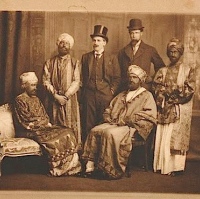
Welcome To Weirdsville: The Imitation Of Those Who We Cannot Resemble

This is very, very cool: a brand new Welcome To Weirsville piece I wrote just went up on the excellent The Cud site.  

Here's a tease below - and, of course, if you want to read more pieces about fun and odd and strange and (yep) weird history check out my book Welcome To Weirdsville


The Imitation Of Those Who We Cannot Resemble

Almost all absurdity of conduct arises from the imitation of those who we cannot resemble. –Samuel Johnson

"Stop fidgeting, everyone ... Jimmy, that'd better not be gum in your mouth!  No, Betty you can't go to the bathroom – you should have thought of that before we started ... now you'll just have to wait for the break.  Okay, class, today we're going to be discussing possibly one of – if not the -- most important literary figures of the twentieth century: a woman who pretty much single handedly created what we consider to be modern literature..."
It's quite sad, really, that so many of us have had the juices systematically squeezed out of history, reducing it to nothing but powdery, gagging facts and bland, pasty figures – or, even worse, giants carved in marble, hands on hips, forever steadfastly glaring out at us in the future, their destinies unquestionable.

But, believe me, do some digging and there's juice a plenty in those dusty heroes – and while many of them certainly deserve to be on their lofty pedestals you'll quickly learn that more than a few of them might be wonderfully, delightfully, fun ... if not totally nuts.

Sarah Bernhardt, for instance, the legendary light of the stage, not only had a wooden leg, liked to sleep in her coffin, but also had quite a few ... involvements, shall we say, with people such as Victor Hugo and Gustavo Doré; Tycho Brahe, one of the brightest stars in astronomy not only had a fake metal nose (having lost his original in a duel) but kept an on-staff dwarf for the entertainment of his guests as well as himself; Richard Feynman, a Nobel Prize to his name, was an notorious humorist and prankster -- as well as quite the established cracksman, even claiming to have once easily got into the safe containing the plans for the first atomic bomb; Georges Simenon, the master French mystery author, not wrote over 200 novels but also claimed to have made love to 10,000 women; and let's not even get started on what M.Christian likes to do with balloon animals...

Which takes us to 1910, back when Britain quite literally ruled the waves: the time of what has been called by many to be the date of the greatest prank in all of history ... and the literary light who had a major part in it.

Now pranks were nothing new, especially for students of Cambridge, but this one – orchestrated by the infamously witty Horace de Vere Cole – set the bar.  Horace tried afterward to top himself several times afterward, including infamously dumping horse ... leavings in the canals in Venice (to confuse the non-horse city residents), or arranging a group of bald men to sit in strategic places at the theater so that their domes, when viewed from the balcony, would spell out a rather (ahem) rude word, but his crowning achievement involved the pride of the British Navy, a few of his close friends, some costuming skills, the flag of Zanzibar, and a brilliant degree of planning – all of which rocked the world and nearly got one of them a sentence of ten of the best with a cane.

[MORE]

Thursday, July 26, 2007

Welcome to Weirdsville: "I Don't Feel So Good...."

The wonderful Avi at Dark Roasted Blend has just posted a brand new Welcome to Weirdsville article: this time about nasty little boo-boos involving chemical and biological weapons (as if dropping nukes wasn't bad enough).

Thursday, June 19, 2008

Welcome to Weirdsville: Things That Shouldn't ... But Still Do ... Go Boom


If you like the Welcome to Weirdsville stuff here then head on over to the always-fun Dark Roasted Blend for a new article on exploding lakes, busting toads, and suicide bombing ants.

Thursday, November 15, 2012

Welcome to Weirdsville: The Art Of Science And The Science Of Art

Here's another fun piece from Dark Roasted Blend - and, naturally, in my new book, Welcome to Weirdsville.  This time it's about artists who are scientists ... and scientists who are artists.


It reads contradictory, conflicted: the art of science/science of art – the mixture of the logical and methodical with the imaginative and emotional.

But science and art – or, if you’d prefer, art and science – have held hands, if not close friends, for a very long time. Greek and Roman artists followed often strict guidelines considering the correct mathematical proportions of the figures in their frescoes and sculptures, Japanese woodblocks were as much about mechanical precision as they were about the subject being printed, the Renaissance was all about using science to bring a literal new dimension to painting, and then you have the work of Leopold and Rudolf Blaschka.

No, you haven’t heard of Leopold or Rudolf Blaschka – but you certainly should have. Unlike the Greeks and and Romans, the Japanese Ukiyo-e artists, Michangelo and Leonardo, Leopold and Rudolf Blaschka aren’t well known outside of either esoteric or scientific circles.

Which is what makes them so remarkable: they mixed the staggering beauty of pure art with a precision and dedication worthy of great scientists.

Leopold and Rudolf were glass artisans – possibly some of the greatest, ever. But what they created weren’t just glass and goblets, lampshades and windows. Nope, Leopold and Rudolf created nature.


Simplified, here’s the story: Professor George Lincoln Goodale, of Harvard, wanted to teach botany. But the problem with teaching botany is that plants have a tendency to … well, die. Sure, you could preserve some specimens but lots of species just don’t look the same after being dried – the plant version of stuffed and mounted. Yes, you could try using paintings or even photography but plants are – and here’s a surprise -- three dimensional. So what Professor Goodale did was ask the Blaschkas to create glass plants to help him teach his students about real ones.

But the Blaschkas did more than just recreate plants: they created astounding works of not only scientific accuracy but pure, brilliant, art. Looking at even the simplest of their efforts is deceptive – a sign of their genius. Their reproductions don't resemble the original plants – they look EXACTLY like them, created by hand, in fickle and fragile glass. All from 1887 to 1936.

What’s even more impressive is how many they created: more than 3,000 models of some 850 species – many of which can be seen on display at Harvard while many others are being painstakingly restored.

But the Blaschkas didn’t stop at plants. Not to take anything away from their artistry, but plants are relatively simple subjects. In some cases the Blaschkas could even work from live, or recently plucked, models. But there are much more difficult subjects out there, creatures so rare and fragile that very few men have ever seen them in their delicate flesh – even more frail than the glass the Blaschkas used to recreate them.


When these reproductions were made, in the late 19th century, only a few marine explorers and a few lucky seaman had seen any of them. Octopi, urchins, sea cucumbers, anemones, jellyfish, cuttlefish – they were too rare, too fragile, to be seen outside of the sea. That is until the Blaschkas.

I wish there was some way to request a moment of silence. I wish there was some way to ask you to stop reading this and look at the pictures here and at other places of the web. I wish there was some way for you to have a nice glass of wine, put on some nice music – maybe Bach, who also mixed science and art – and just admire the care, the craft, and the pure art the Blaschkas created.


The Blaschka brothers left an inspirational legacy. Josiah McElheny – the recipient of a MacArthur Genius Grant – is a kindred spirit to the Blaschkas, another mind-blowing artist who works in the whimsical and temperamental world of glass … and the disciplined domain of science.

McElheny’s works -- like that of the Blaschka brothers -- finds inspiration in the universe around us, particularly with one sculpture that depicts a key moment. In many ways this is a perfect place to stop: the Blaschka brothers created perfect artistic reproductions of nature to teach science, and McElheny created a sculptural interpretation of the ultimate act of creation, as discovered by science: the Big Bang.

The art of science, the science of art … in the end they are both looking for the same thing: a way to show the nature of everything.

Sunday, June 2, 2013

Welcome to Weirdsville: The Art Of Science And The Science Of Art

Here's another fun piece from Dark Roasted Blend - and, naturally, in my new book, Welcome to Weirdsville.  This time it's about artists who are scientists ... and scientists who are artists.


It reads contradictory, conflicted: the art of science/science of art – the mixture of the logical and methodical with the imaginative and emotional.

But science and art – or, if you’d prefer, art and science – have held hands, if not close friends, for a very long time. Greek and Roman artists followed often strict guidelines considering the correct mathematical proportions of the figures in their frescoes and sculptures, Japanese woodblocks were as much about mechanical precision as they were about the subject being printed, the Renaissance was all about using science to bring a literal new dimension to painting, and then you have the work of Leopold and Rudolf Blaschka.

No, you haven’t heard of Leopold or Rudolf Blaschka – but you certainly should have. Unlike the Greeks and and Romans, the Japanese Ukiyo-e artists, Michangelo and Leonardo, Leopold and Rudolf Blaschka aren’t well known outside of either esoteric or scientific circles.

Which is what makes them so remarkable: they mixed the staggering beauty of pure art with a precision and dedication worthy of great scientists.

Leopold and Rudolf were glass artisans – possibly some of the greatest, ever. But what they created weren’t just glass and goblets, lampshades and windows. Nope, Leopold and Rudolf created nature.


Simplified, here’s the story: Professor George Lincoln Goodale, of Harvard, wanted to teach botany. But the problem with teaching botany is that plants have a tendency to … well, die. Sure, you could preserve some specimens but lots of species just don’t look the same after being dried – the plant version of stuffed and mounted. Yes, you could try using paintings or even photography but plants are – and here’s a surprise -- three dimensional. So what Professor Goodale did was ask the Blaschkas to create glass plants to help him teach his students about real ones.

But the Blaschkas did more than just recreate plants: they created astounding works of not only scientific accuracy but pure, brilliant, art. Looking at even the simplest of their efforts is deceptive – a sign of their genius. Their reproductions don't resemble the original plants – they look EXACTLY like them, created by hand, in fickle and fragile glass. All from 1887 to 1936.

What’s even more impressive is how many they created: more than 3,000 models of some 850 species – many of which can be seen on display at Harvard while many others are being painstakingly restored.

But the Blaschkas didn’t stop at plants. Not to take anything away from their artistry, but plants are relatively simple subjects. In some cases the Blaschkas could even work from live, or recently plucked, models. But there are much more difficult subjects out there, creatures so rare and fragile that very few men have ever seen them in their delicate flesh – even more frail than the glass the Blaschkas used to recreate them.


When these reproductions were made, in the late 19th century, only a few marine explorers and a few lucky seaman had seen any of them. Octopi, urchins, sea cucumbers, anemones, jellyfish, cuttlefish – they were too rare, too fragile, to be seen outside of the sea. That is until the Blaschkas.

I wish there was some way to request a moment of silence. I wish there was some way to ask you to stop reading this and look at the pictures here and at other places of the web. I wish there was some way for you to have a nice glass of wine, put on some nice music – maybe Bach, who also mixed science and art – and just admire the care, the craft, and the pure art the Blaschkas created.


The Blaschka brothers left an inspirational legacy. Josiah McElheny – the recipient of a MacArthur Genius Grant – is a kindred spirit to the Blaschkas, another mind-blowing artist who works in the whimsical and temperamental world of glass … and the disciplined domain of science.

McElheny’s works -- like that of the Blaschka brothers -- finds inspiration in the universe around us, particularly with one sculpture that depicts a key moment. In many ways this is a perfect place to stop: the Blaschka brothers created perfect artistic reproductions of nature to teach science, and McElheny created a sculptural interpretation of the ultimate act of creation, as discovered by science: the Big Bang.

The art of science, the science of art … in the end they are both looking for the same thing: a way to show the nature of everything.

Thursday, September 12, 2013

Welcome to Weirdsville: The Art Of Science And The Science Of Art

Here's another fun piece from Dark Roasted Blend - and, naturally, in my new book, Welcome to Weirdsville.  This time it's about artists who are scientists ... and scientists who are artists.


It reads contradictory, conflicted: the art of science/science of art – the mixture of the logical and methodical with the imaginative and emotional.

But science and art – or, if you’d prefer, art and science – have held hands, if not close friends, for a very long time. Greek and Roman artists followed often strict guidelines considering the correct mathematical proportions of the figures in their frescoes and sculptures, Japanese woodblocks were as much about mechanical precision as they were about the subject being printed, the Renaissance was all about using science to bring a literal new dimension to painting, and then you have the work of Leopold and Rudolf Blaschka.

No, you haven’t heard of Leopold or Rudolf Blaschka – but you certainly should have. Unlike the Greeks and and Romans, the Japanese Ukiyo-e artists, Michangelo and Leonardo, Leopold and Rudolf Blaschka aren’t well known outside of either esoteric or scientific circles.

Which is what makes them so remarkable: they mixed the staggering beauty of pure art with a precision and dedication worthy of great scientists.

Leopold and Rudolf were glass artisans – possibly some of the greatest, ever. But what they created weren’t just glass and goblets, lampshades and windows. Nope, Leopold and Rudolf created nature.


Simplified, here’s the story: Professor George Lincoln Goodale, of Harvard, wanted to teach botany. But the problem with teaching botany is that plants have a tendency to … well, die. Sure, you could preserve some specimens but lots of species just don’t look the same after being dried – the plant version of stuffed and mounted. Yes, you could try using paintings or even photography but plants are – and here’s a surprise -- three dimensional. So what Professor Goodale did was ask the Blaschkas to create glass plants to help him teach his students about real ones.

But the Blaschkas did more than just recreate plants: they created astounding works of not only scientific accuracy but pure, brilliant, art. Looking at even the simplest of their efforts is deceptive – a sign of their genius. Their reproductions don't resemble the original plants – they look EXACTLY like them, created by hand, in fickle and fragile glass. All from 1887 to 1936.

What’s even more impressive is how many they created: more than 3,000 models of some 850 species – many of which can be seen on display at Harvard while many others are being painstakingly restored.

But the Blaschkas didn’t stop at plants. Not to take anything away from their artistry, but plants are relatively simple subjects. In some cases the Blaschkas could even work from live, or recently plucked, models. But there are much more difficult subjects out there, creatures so rare and fragile that very few men have ever seen them in their delicate flesh – even more frail than the glass the Blaschkas used to recreate them.


When these reproductions were made, in the late 19th century, only a few marine explorers and a few lucky seaman had seen any of them. Octopi, urchins, sea cucumbers, anemones, jellyfish, cuttlefish – they were too rare, too fragile, to be seen outside of the sea. That is until the Blaschkas.

I wish there was some way to request a moment of silence. I wish there was some way to ask you to stop reading this and look at the pictures here and at other places of the web. I wish there was some way for you to have a nice glass of wine, put on some nice music – maybe Bach, who also mixed science and art – and just admire the care, the craft, and the pure art the Blaschkas created.


The Blaschka brothers left an inspirational legacy. Josiah McElheny – the recipient of a MacArthur Genius Grant – is a kindred spirit to the Blaschkas, another mind-blowing artist who works in the whimsical and temperamental world of glass … and the disciplined domain of science.

McElheny’s works -- like that of the Blaschka brothers -- finds inspiration in the universe around us, particularly with one sculpture that depicts a key moment. In many ways this is a perfect place to stop: the Blaschka brothers created perfect artistic reproductions of nature to teach science, and McElheny created a sculptural interpretation of the ultimate act of creation, as discovered by science: the Big Bang.

The art of science, the science of art … in the end they are both looking for the same thing: a way to show the nature of everything.